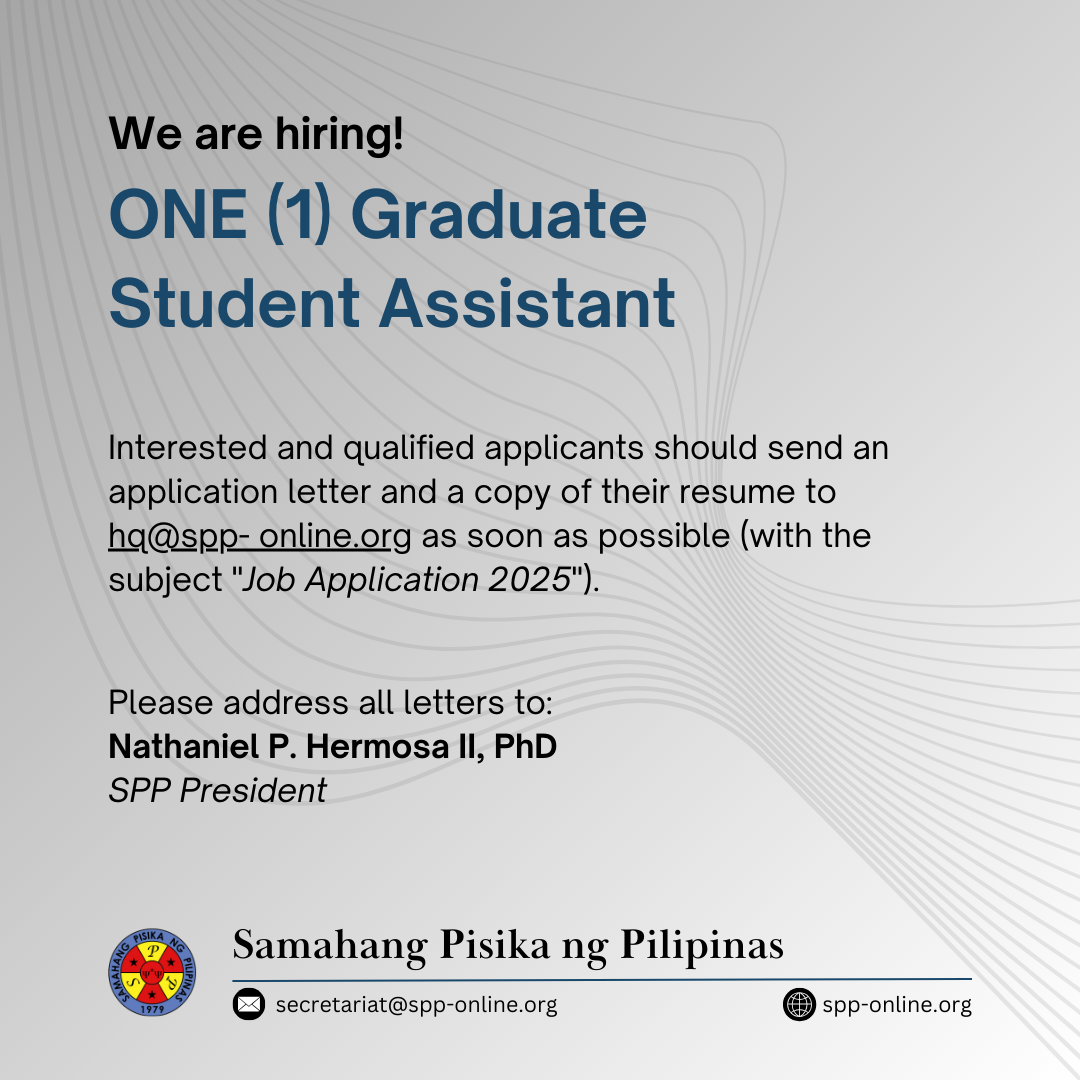
SPP is looking for a graduate student assistant to perform administrative tasks for the Proceedings of the SPP.

The Association of Asia Pacific Physical Societies and the Chinese Physical Society announce that the 16th Asia Pacific Physics Conference will take place in Haikou, China from 19 October to 24 October 2025. SPP and the UP National Institute for Science and Mathematics Education Development (UP-NISMED) will conduct the 2024 Physics Education Workshop “Integrating Digital Technologies into Inquiry-Based Physics Lessons,” on 5 July 2024 at the Batangas State University, Pablo Borbon Campus. SPP is looking for qualified applicants to be a full-time Administrative Staffer. The National Institute of Physics and its partners from all over the Philippines invite everyone to attend a webinar on topics at the forefront of theoretical and experimental physics on 11 March 2024. The Asia Pacific Center for Theoretical Physics announces its 2023 Spring Colloquium lineup of online talks.
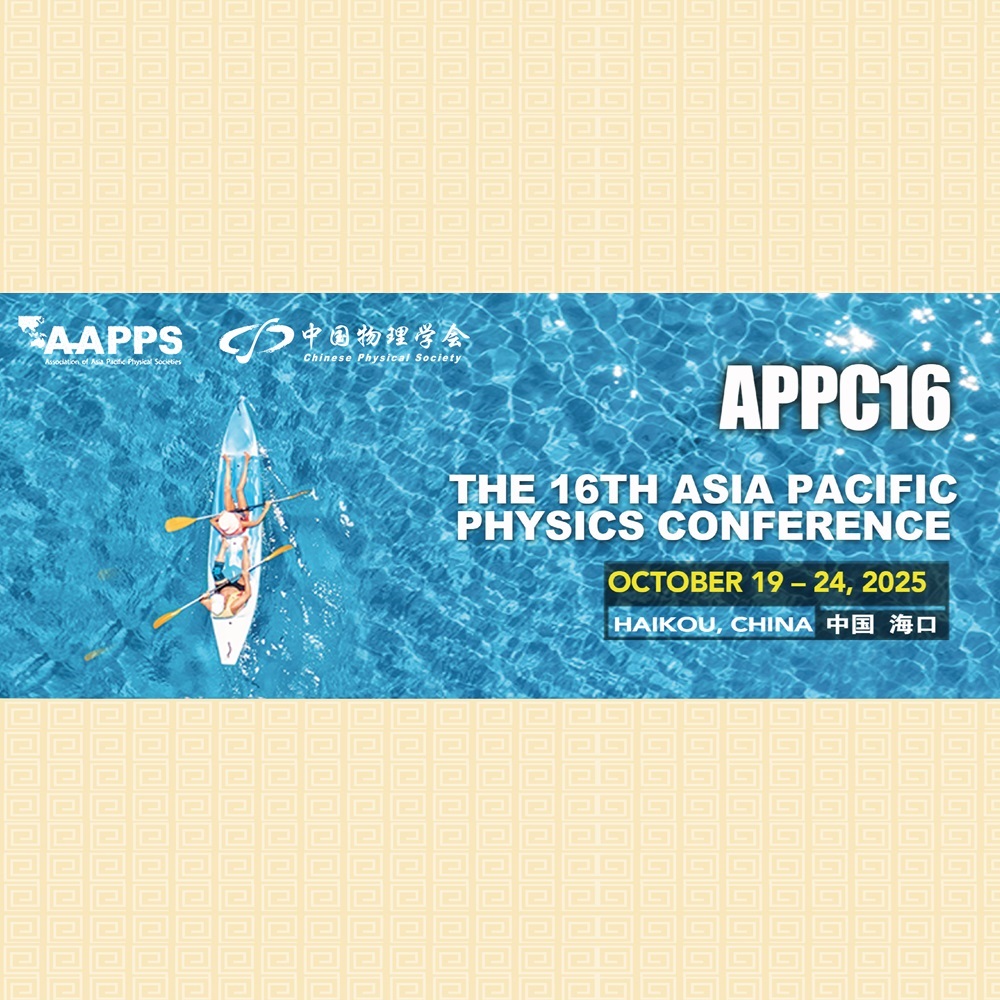
Association of Asia Pacific Physical Societies announces APPC16
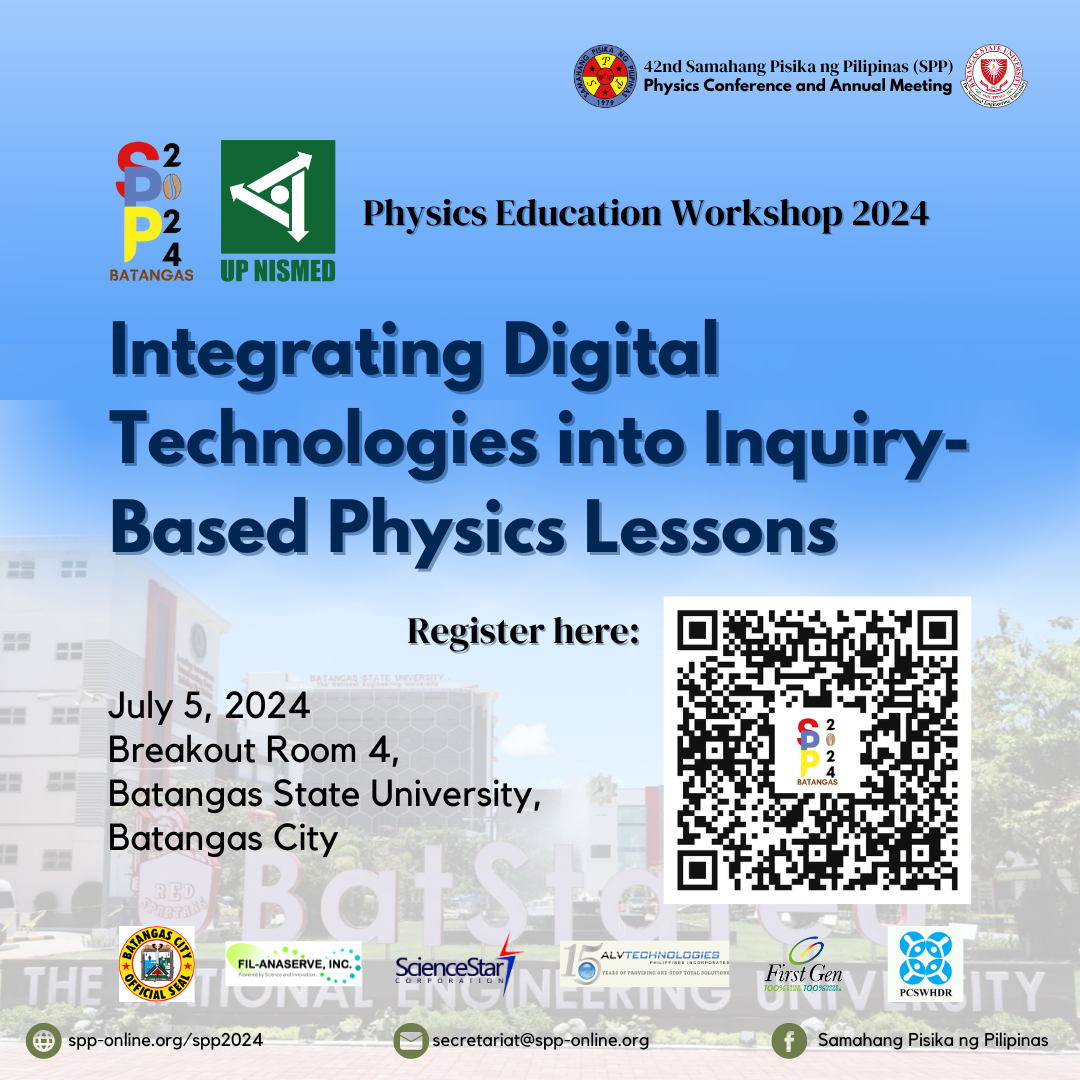
SPP Physics Education Workshop 2024
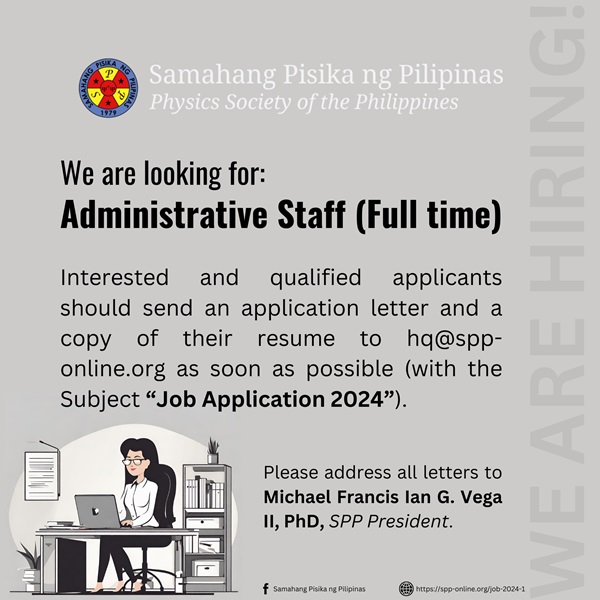
Job Posting 2024-1: SPP Full-time Administrative Staff
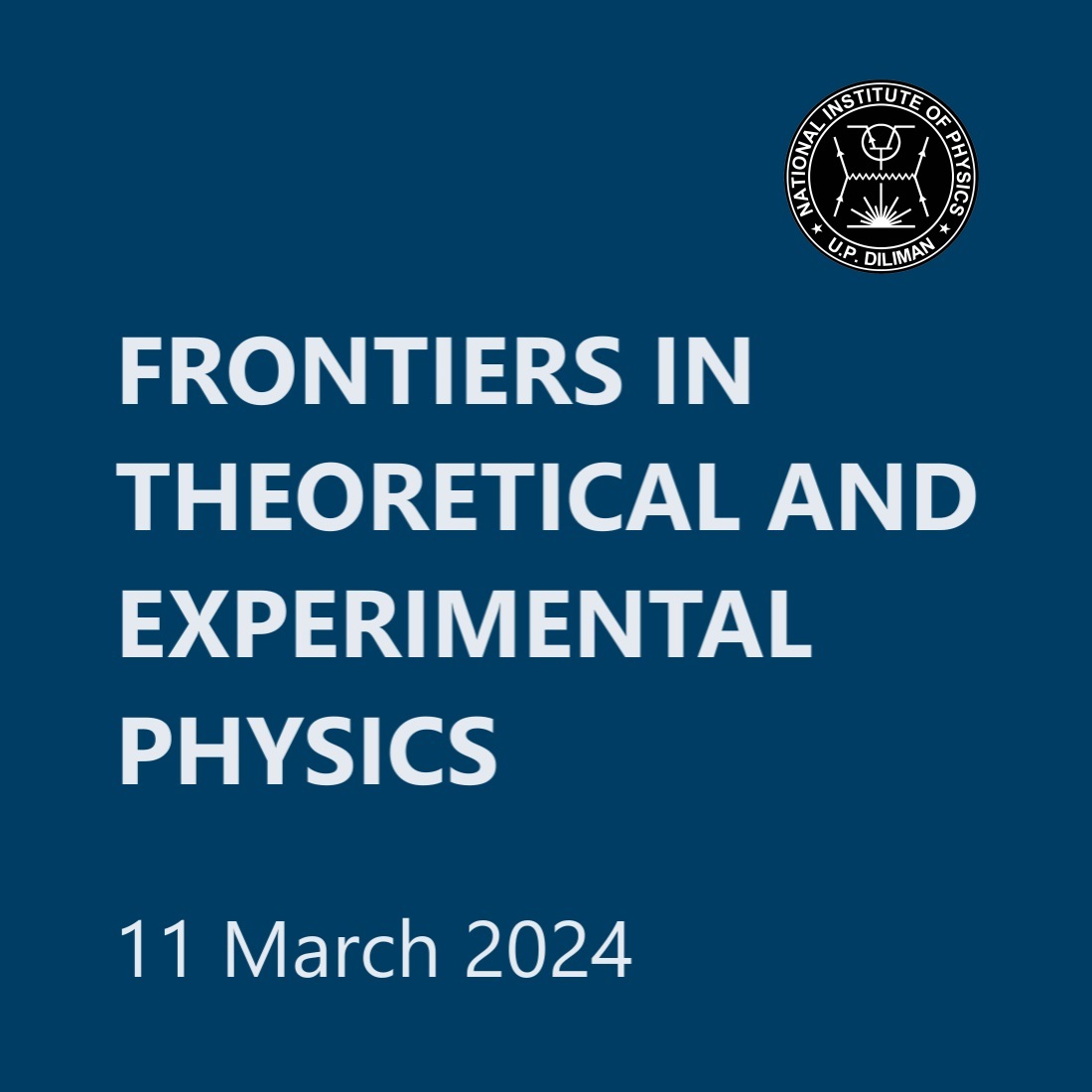
Webinar: Frontiers in Theoretical and Experimental Physics 2024
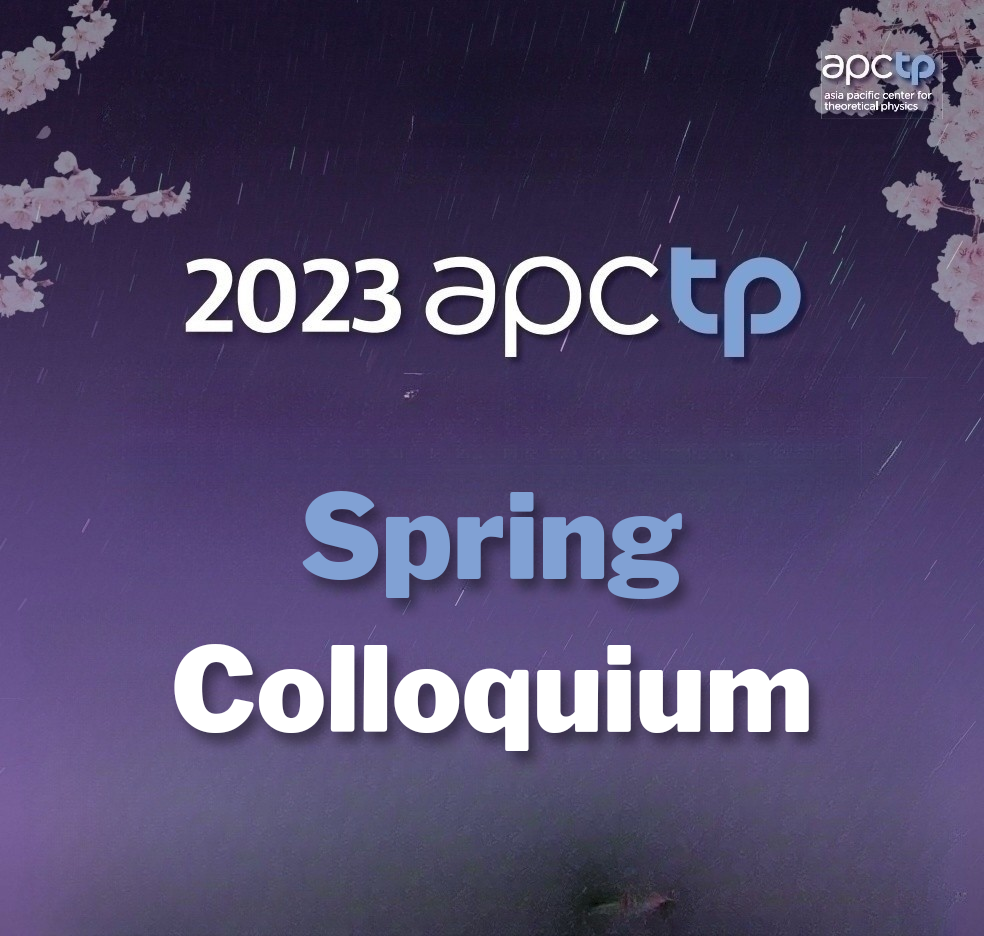
APCTP announces 2023 Spring Colloquium
Facebook Posts
 Pagbati Dr. Vallerie Ann I. Samson, bagong hirang na DIRECTOR ng DOST-Philippine Nuclear Research Institute. Mabuhay ang SAMAHAN!LOOK: Department of Science and Technology Secretary Renato U. Solidum Jr. officiated the oath-taking of the new DOST-Philippine Nuclear Research Institute (DOST-PNRI) Director Vallerie Ann I. Samson and Deputy Director Maria Teresa A. Salabit.
Before her appointment, Director Samson served as the DOST-PNRI deputy director from 2021. She was also a former assistant professor at the National Institute of Physics (NIP) at the University of the Philippines Diliman. She joined DOST-PNRI in 2002 under the Atomic Research Division. Meanwhile, Deputy Director Salabit previously served as the head of the Nuclear Safeguards and Security Section in DOST-PNRI's Nuclear Regulatory Division, where she was responsible for ensuring that all nuclear materials in the country are used for peaceful purposes.
DOST formally welcomes the new DOST-PNRI officials.
#OneDOST4U
#SolutionsOpportunitiesforAll
The Samahang Pisika ng Pilipinas and the Samahang Pisika ng Visayas at Mindanao are proud to announce the stellar performance of Team Philippines during the International Physics Olympiad (IPhO) 2026 held in Bucaramanga, Colombia last July 4-12, 2026! ✨The Samahang Pisika ng Pilipinas and the Samahang Pisika ng Visayas at Mindanao are proud to announce the stellar performance of Team Philippines during the International Physics Olympiad (IPhO) 2026 held in Bucaramanga, Colombia last July 4-12, 2026! ✨
🥈 𝗦𝗜𝗟𝗩𝗘𝗥 𝗠𝗘𝗗𝗔𝗟𝗜𝗦𝗧
Reuben Joseph Felix
Philippine Science High School - Calabarzon Region Campus in Batangas City
🥉𝗕𝗥𝗢𝗡𝗭𝗘 𝗠𝗘𝗗𝗔𝗟𝗜𝗦𝗧
Alfonso Miguel Dizon
Philippine Science High School - Main Campus
𝗛𝗢𝗡𝗢𝗥𝗔𝗕𝗟𝗘 𝗠𝗘𝗡𝗧𝗜𝗢𝗡
Justine Aaron Co
Saint Jude Catholic School
Team leader and UP Diliman professor Jose Perico Esguerra considers this year’s performance as the third-best in the Philippines’ participation in the IPhO over the years.
Congratulations for raising our flag on the world stage! Mabuhay! 🇵🇭
#ppo2026
#ipho2026
#sppopportunities: The UST Department of Mathematics & Physics is hiring.📣 Join Our Team!
The UST Department of Mathematics & Physics is hiring.

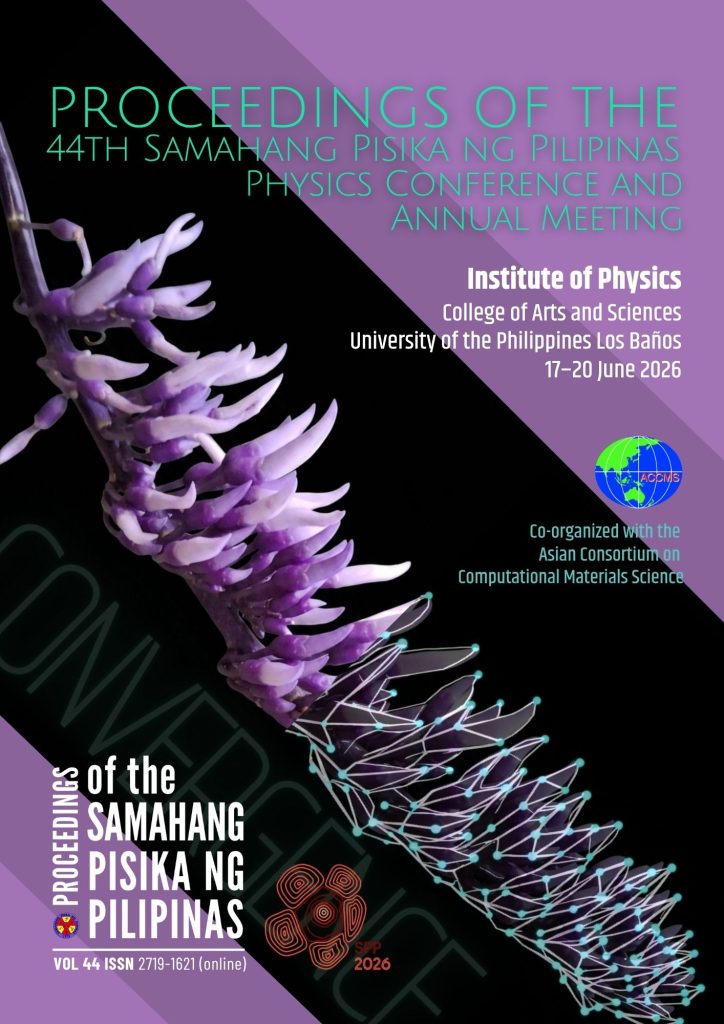
Convergence
Proceedings of the 44th Samahang Pisika ng Pilipinas Physics Conference
17–20 June 2026
Institute of Physics, College of Arts and Sciences
University of the Philippines Los Baños PH
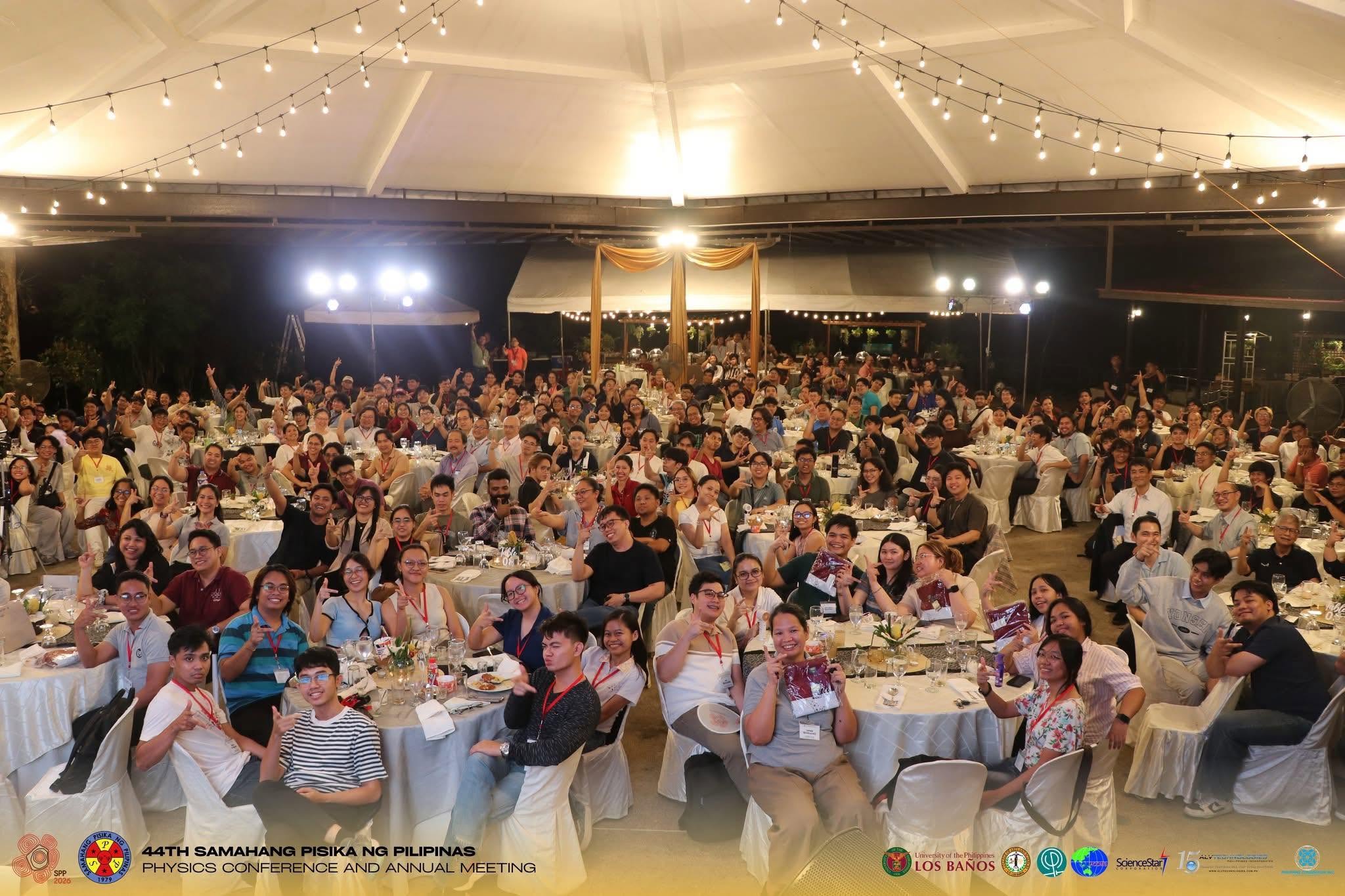
SPP2026 Conference Photo
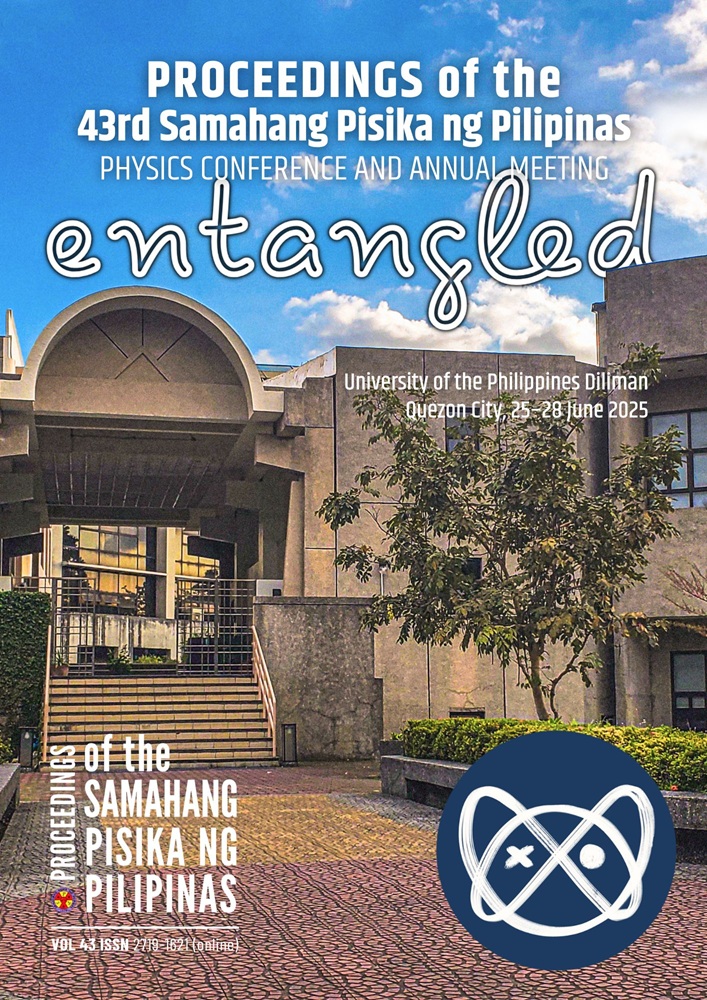
Entangled!
Proceedings of the 43rd Samahang Pisika ng Pilipinas Physics Conference
25−28 June 2025
National Institute of Physics, University of the Philippines Diliman PH
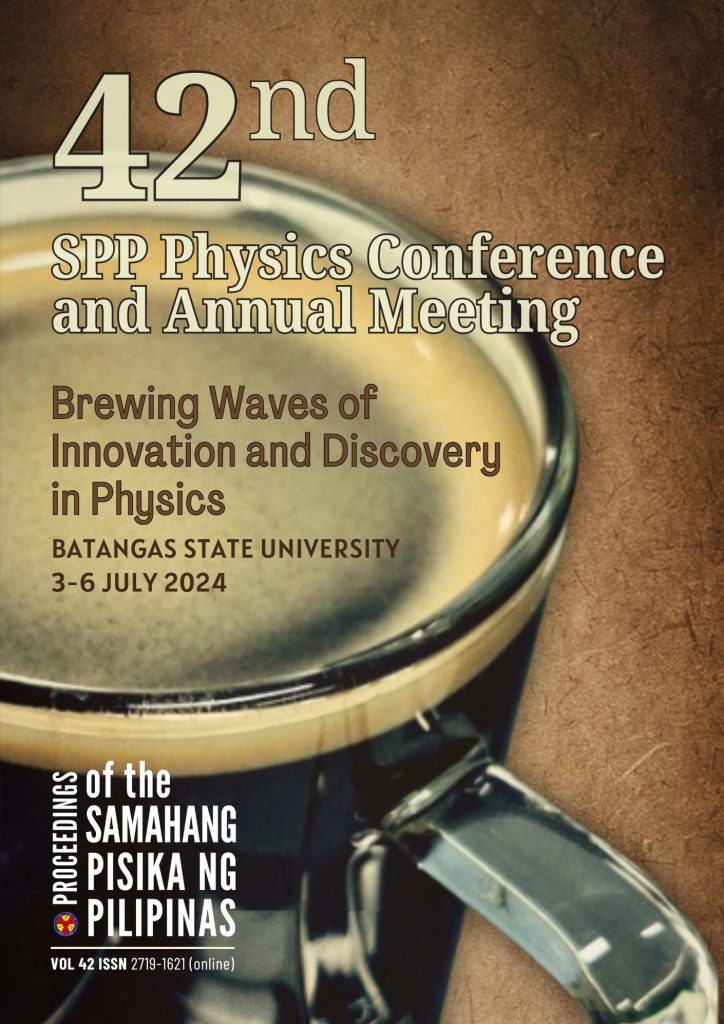
Brewing waves of innovation and discovery in Physics
Proceedings of the 42nd Samahang Pisika ng Pilipinas Physics Conference
3−6 July 2024
Batangas State University, Pablo Borbon Campus, Batangas City PH
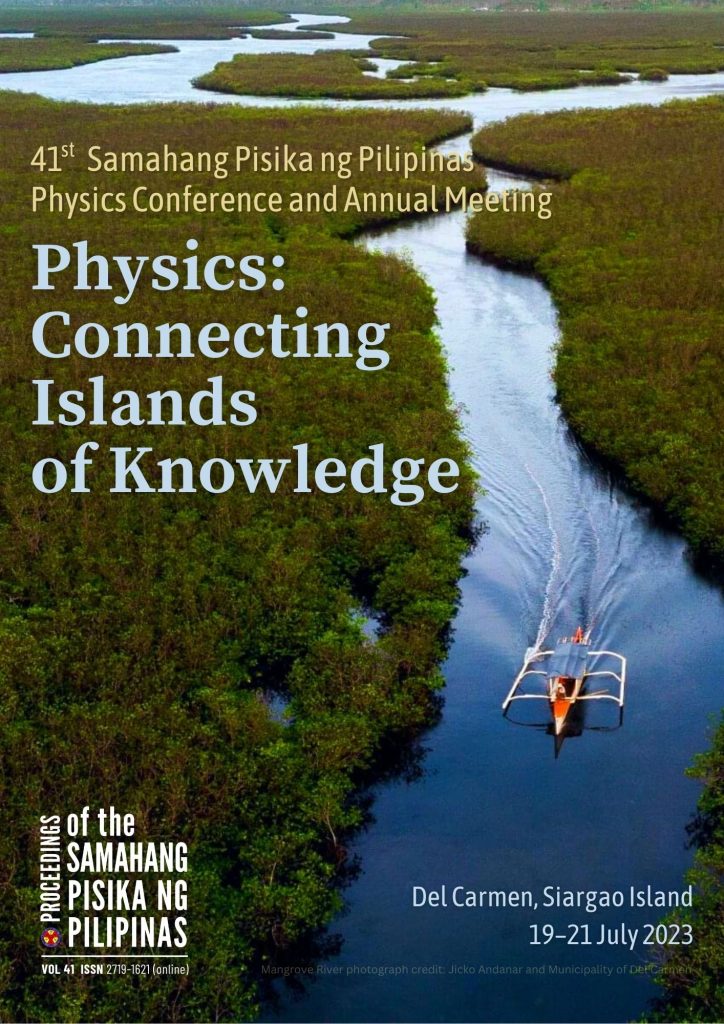
Physics: Connecting islands of knowledge
Proceedings of the 41st Samahang Pisika ng Pilipinas Physics Conference
19−21 July 2023
Del Carmen Convention Center and Bayay Numancia, Del Carmen, Siargao Island PH
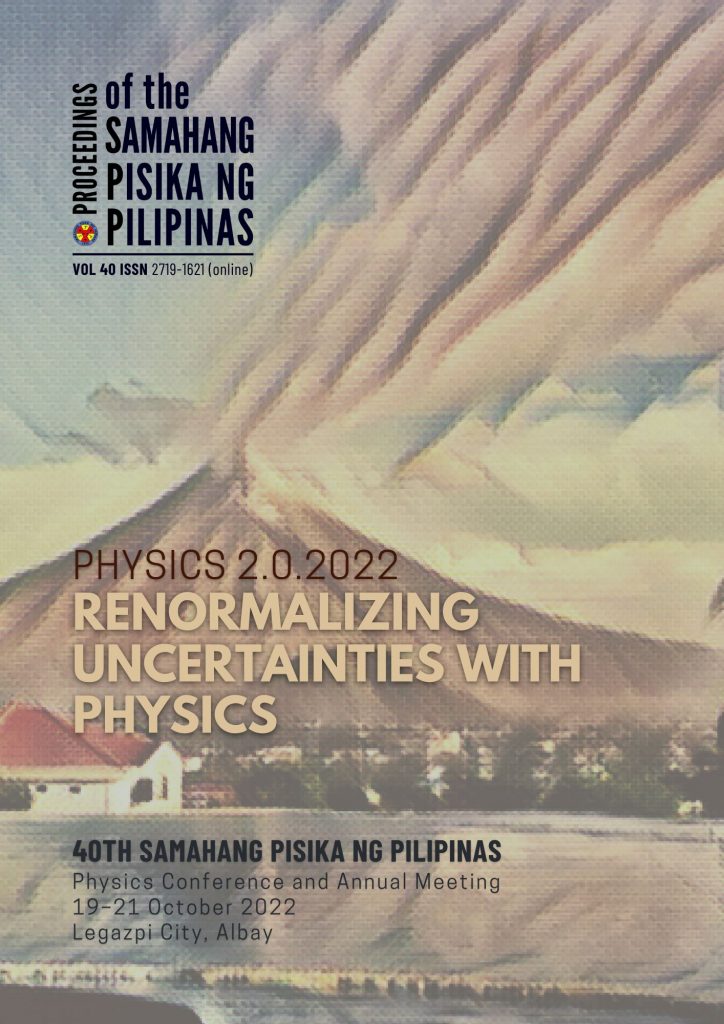
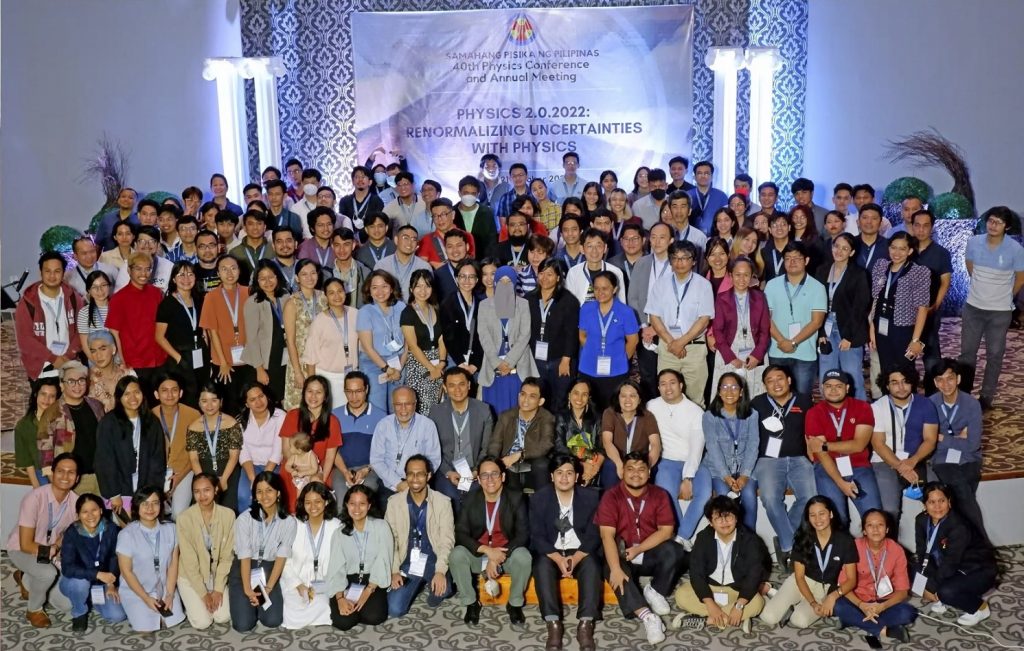
Physics 2.0.2022: Renormalizing uncertainties with Physics
Proceedings of the 40th Samahang Pisika ng Pilipinas Physics Conference
19−21 October 2022
Proxy by The Oriental, Legazpi City, Albay PH


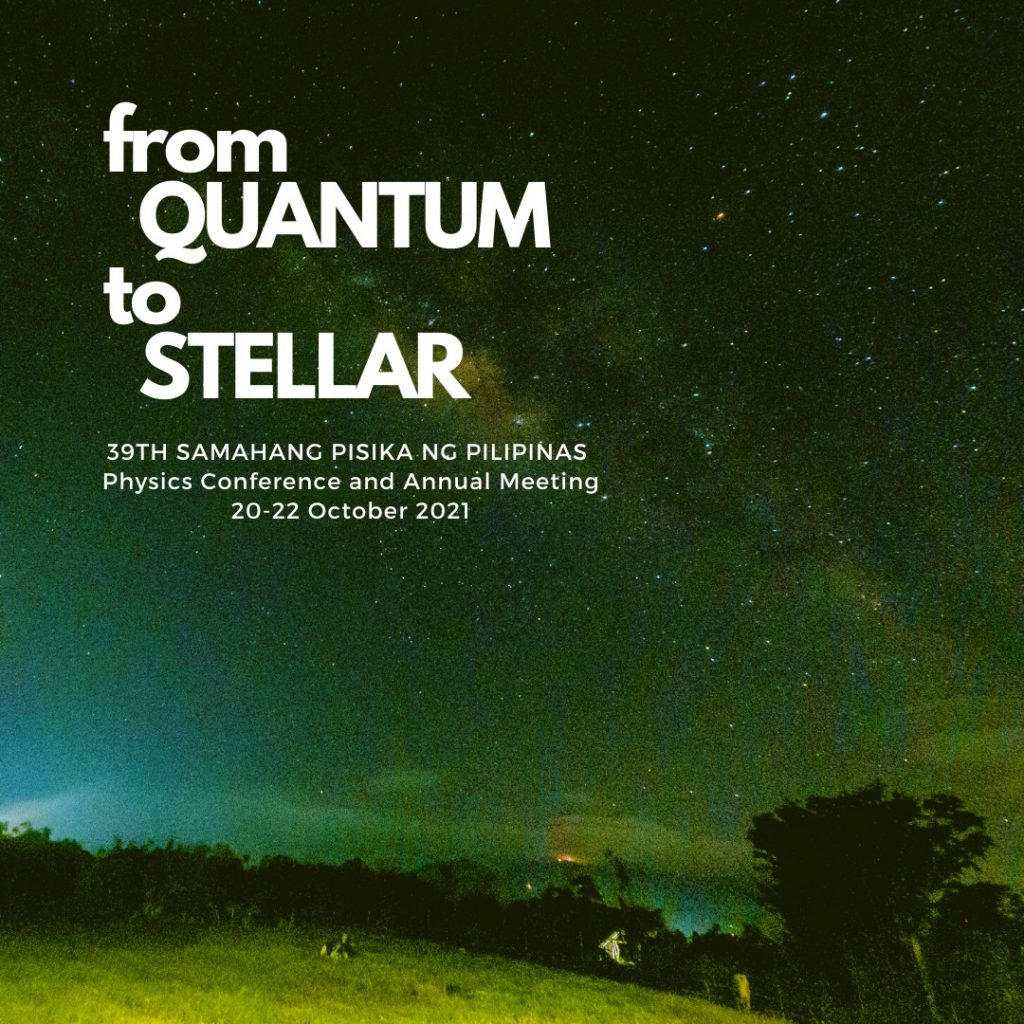
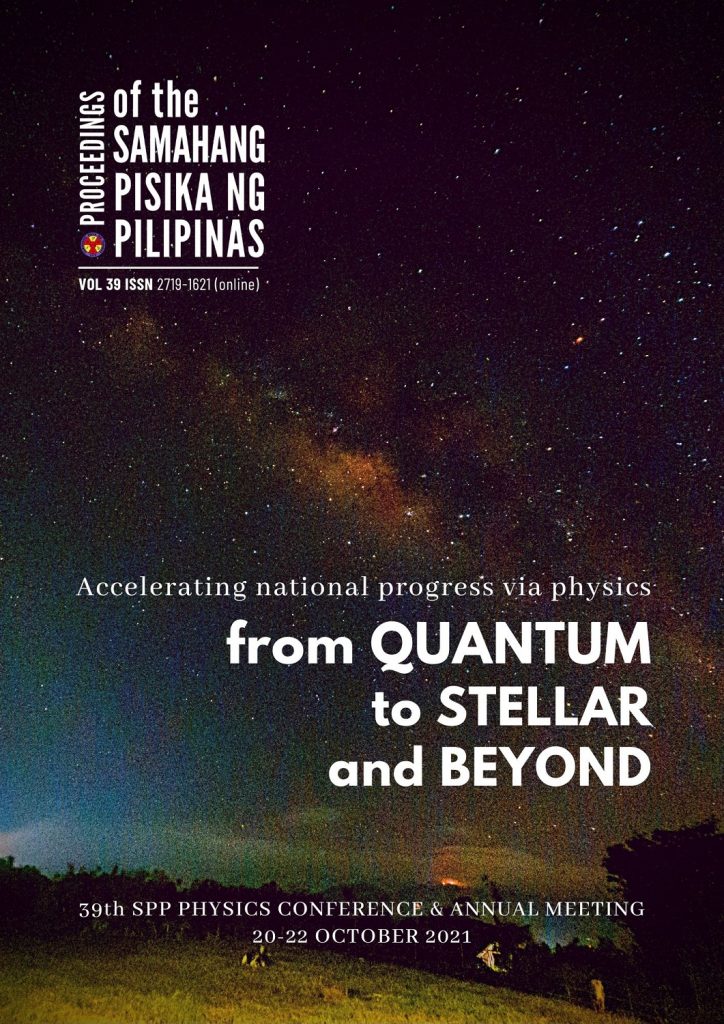
Accelerating national progress via physics: From quantum to stellar and beyond 20-22 October 2021
Proceedings of the 39th Samahang Pisika ng Pilipinas Physics Conference
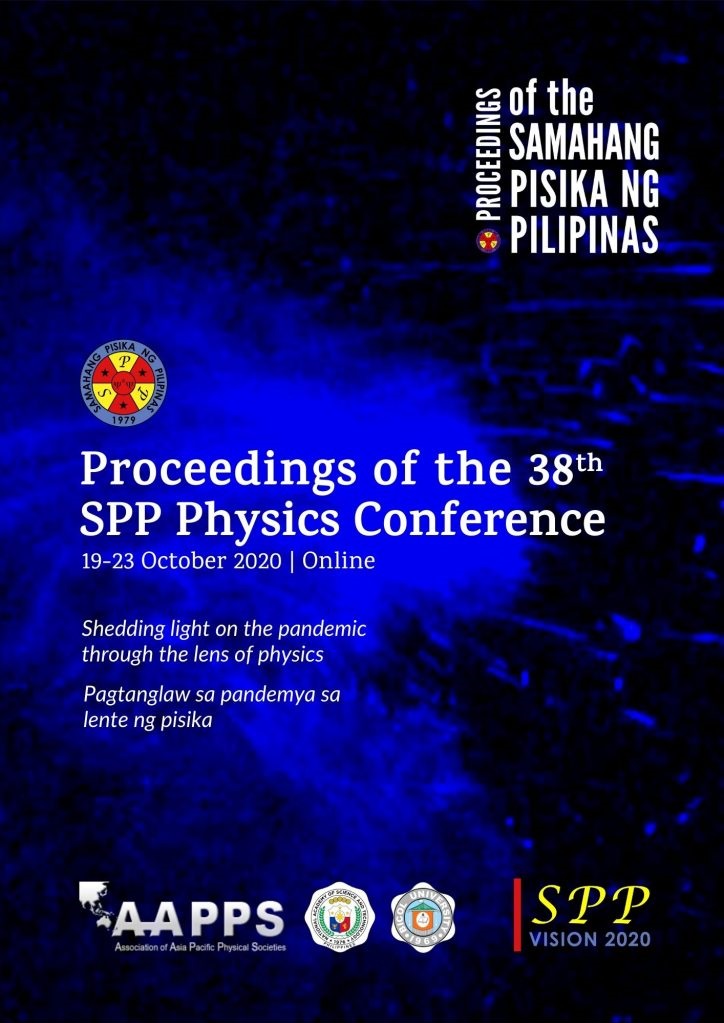
Shedding light on the pandemic through the lens of physics Pagtanglaw sa pandemya sa lente ng pisika 19-23 October 2020
Proceedings of the 38th Samahang Pisika ng Pilipinas Physics Conference
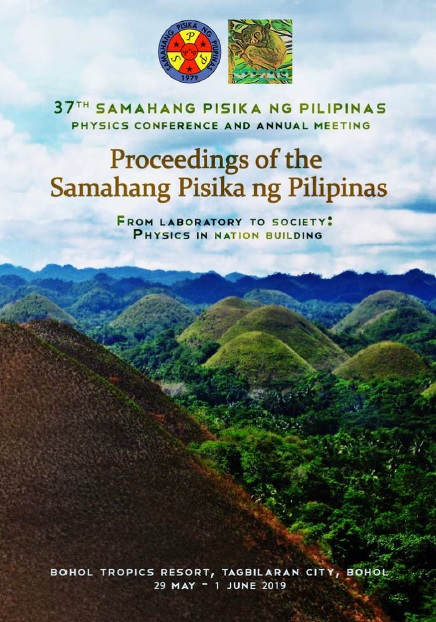
From laboratory to society: Physics in nation building 29 May – 1 June 2019, Tagbilaran City, Philippines
Proceedings of the 37th Samahang Pisika ng Pilipinas Physics Conference
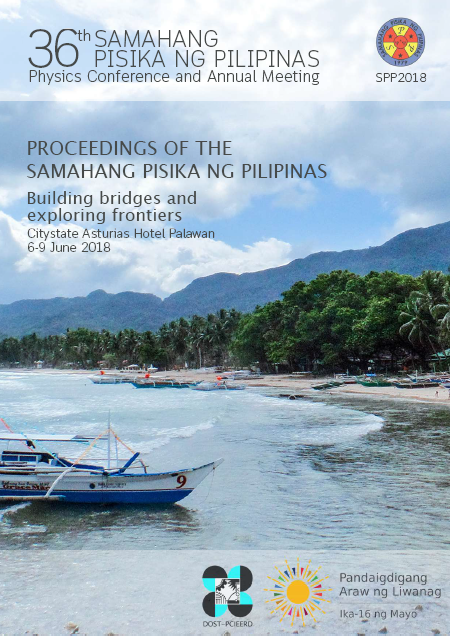
Building bridges and exploring frontiers 6-9 June 2018, Puerto Princesa City, Philippines
Proceedings of the 36th Samahang Pisika ng Pilipinas Physics Conference